
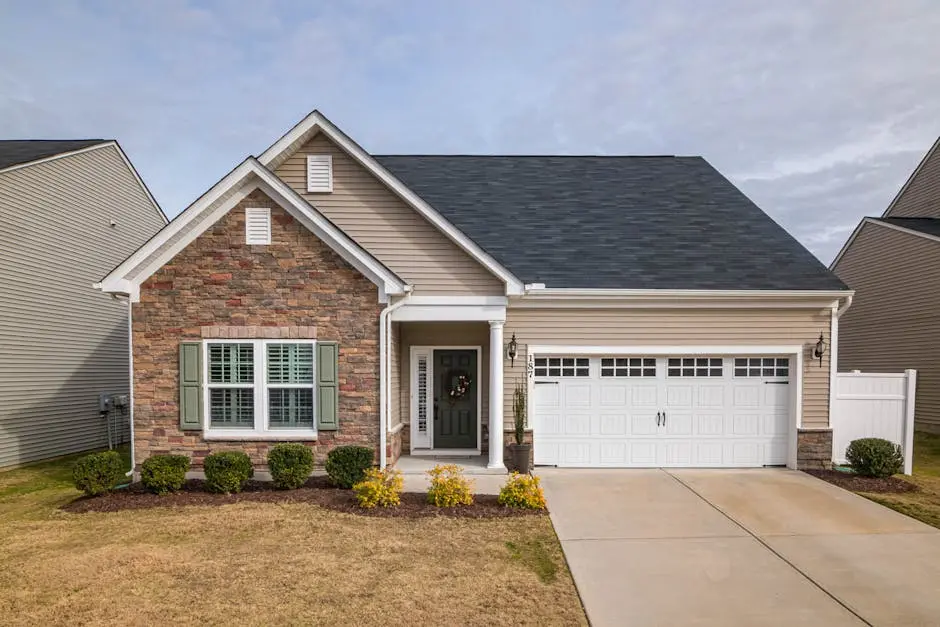
If you are weighing new siding on a Cincinnati house this autumn, two numbers decide most of the project. The first is what the material gives back at resale: in this region fiber cement returns about 101 percent of what it costs, and vinyl about 80 percent. The second is the temperature on the morning the crew hangs the first panel, because below 40°F a vinyl installation has to be cut and spaced differently or the wall buckles next July. This article covers both, plus the local rules that decide what you are allowed to put on the house in the first place.
What an exterior job actually returns in the Ohio Valley
Zonda’s 38th annual Cost vs. Value report, published in September 2025, is the only broad dataset that pairs real job costs with what appraisers and agents say the work adds at sale. For the East North Central region, which covers Ohio, the regional figures are worth reading side by side:
- Fiber-cement replacement: $23,515 job cost, $23,805 resale value, 101.2 percent recouped.
- Vinyl replacement: $19,139 job cost, $15,393 resale value, 80.4 percent recouped.
- Asphalt shingle roof replacement: $29,253 job cost, $20,252 resale value, 69.2 percent recouped.
Nationally the fiber-cement number is higher still, at 113.7 percent, which put it fourth on the whole list of remodeling projects that year. Three things follow from that spread. Fiber cement is the better resale bet by roughly twenty points over vinyl, and the gap is wide enough to survive a lot of quote-to-quote variation. The vinyl job is cheaper to buy but gives back less of what you spend. And a reroof, which returns less than either, is not a resale decision at all — you replace a roof because it is failing, not because it pays.
Treat all three as regional averages for a full replacement on a typical house. They are a reference point for deciding between materials, not a quote for your address. Square footage, how many corners the house has, what the crew finds when the old layer comes off, and whether the trim is replaced all move the real number.
The 40-degree line, and why early November is a decision point
Siding goes on through a Cincinnati winter, but the installation details change with the thermometer, and most homeowners are never told this. Vinyl is a thermoplastic: it grows and shrinks with temperature, and the whole system is designed around letting it do that. The Polymeric Exterior Products Association, successor to the Vinyl Siding Institute, puts the movement at half an inch or more over a 12-foot-6-inch length.
To absorb that, panels are hung rather than fastened down. Fasteners sit centered in the nailing slots, left roughly a thirty-second of an inch loose — about the thickness of a dime — so the panel slides. They go no more than 16 inches apart on horizontal panels and penetrate at least an inch and a quarter into sheathing or framing. Normally the gap at openings and stops is a quarter inch. Below 40°F that minimum goes up to three eighths of an inch, because the panel is already contracted when it is cut, and it has further to grow. Blades are run slowly in cold weather, too, since cold vinyl chips.
Now put that against the calendar. The 1991–2020 normals for Cincinnati have a normal high of 60°F and a low of 40°F on November 1, falling to a high of 48°F and a low of 31°F by November 30. In other words, work starting now begins above the line and finishes below it, and a crew that cuts every panel to the same gap all month is getting one half of the job wrong. A panel cut tight on a 30-degree morning in Loveland is the panel that waves on the first 90-degree afternoon.
This is a short conversation to have with a contractor before you sign, and the answer tells you a lot: ask whether their clearance at openings changes with the temperature, and what they do differently below 40°F. Fiber cement does not move the same way, which is part of why it tolerates a winter schedule more gracefully.
Fiber cement, and what HZ5 on the label means
James Hardie sells the same product in two climate formulations, and Cincinnati is squarely in the cold one. The HardieZone system splits the country between HZ10, built for coastal salt air and hot humid heat, and HZ5, which the manufacturer describes as “right at home in climates with freezing temperatures,” with a surface engineered for “superior paint adhesion and moisture resistance” and a drip edge for water management. For a house that goes through Ohio Valley freeze-thaw cycles every winter, that is the relevant distinction, and it is worth confirming the boards delivered to your driveway carry the HZ5 marking.
The warranty is where most homeowners get a wrong impression, because there are two clocks, not one. On ColorPlus finishes, where colour is baked on in a controlled environment rather than field-painted, the finish carries a 15-year prorated limited warranty against peeling, cracking and chipping. The fiber-cement substrate underneath carries a 30-year non-prorated warranty. The board outlasts the finish on paper, and the finish warranty is prorated while the substrate warranty is not. If a salesperson quotes you a single thirty-year figure for the whole wall, they have merged two different promises.
Note also what the fade claims do and do not say. The manufacturer claims improved fade resistance under high UV, but attaches no year figure to it. The number that means something is the warranty term, not the adjective. If you want the full material comparison before choosing, the types of siding breakdown runs through vinyl, fiber cement and engineered wood in more detail.
Hyde Park and Madeira: the rules that beat the catalogue
Here is the part that no colour brochure covers. Inside the City of Cincinnati, siding replacement on a one-, two- or three-family detached dwelling does not require a building permit. Neither does a roof covering of no more than two layers, like-for-like window replacement, or gutters, downspouts, soffit, fascia and associated trim. That sounds like a free hand, and for most of the city it is.
It is not a free hand on a city-designated historic property, where a Certificate of Appropriateness from the Urban Conservator is required before work starts, permit exemption or no permit exemption. The office takes calls at 513-352-4848. And the district guidelines can be far more specific than people expect. In the Hyde Park Observatory Historic District, aluminum and vinyl are called “generally inappropriate,” resurfacing with them “should be avoided,” and where they are used the exposed width “should not exceed four inches.” Original materials in good condition are not to be covered, cornices, brackets, sills and lintels are not to be obscured, and wood or aluminum is never to be applied over brick or stone.
Read against that, the standard online advice — vinyl is cheap, low-maintenance and comes in every colour you like — is simply wrong for those streets, and a four-inch exposure requirement rules out most of the wide-profile panels a supplier will show you first. Outside the city line the picture changes again, because Madeira, Loveland, Newtown and Anderson Township each have their own building department and their own answer. Confirm the rule for your address before anyone orders material, not after. Our service area pages list the communities we work in across Greater Cincinnati.
Colour and profile choices that still look right in ten years
Three decisions do most of the work here, and only one of them is about taste.
Pick the profile from the architecture rather than the showroom. Traditional lap suits the colonials and postwar ranches that make up most of Anderson Township and Madeira; board-and-batten reads correctly on farmhouse styles and newer construction, and badly on a 1950s ranch.
Pick the colour against the roof you are going to have, not the roof you have now. If a reroof is anywhere in the next few years, choose siding colour knowing the shingle will change, or you will spend the money twice to get a combination that works. Darker bodies look expensive and show fading sooner on walls that take afternoon sun, which in practice means west and south elevations.
And remember that from the curb nobody separates the wall from its edges. Trim, soffit, fascia and gutters are read as one surface. New panels above tired, mismatched gutters is the most common way a finished job still looks half done.
The details that decide whether it still looks good in year ten
Appearance is the easy half. What protects the money is water management, and it happens behind the panels where you will never see it. Siding is a screen that sheds most of the water; the weather-resistive barrier and flashing system handle whatever gets past it. That means a continuous housewrap, lapped shingle-style and taped, integrated with the flashings rather than butted against them. It means flashing at every opening, including hose bibs, lights and vents, and kickout flashing where a roofline meets a wall, which is a small detail that prevents a large and expensive leak. It means keeping the bottom course clear of roofing, concrete and soil so the material is not wicking moisture out of the ground.
Where the budget allows, take the old layer off rather than covering it. Removal is what finds the rot, the insect damage and the failed flashing around windows that a cover-over job seals in for another twenty years. With the wall open it is also the cheapest moment to air-seal the rim joist and penetrations, which is the only part of this project that shows up on a utility bill.
One last piece of housekeeping: write down the brand, product line, colour name and profile when the job is finished, and keep it with the house papers. Siding gets damaged in storms, and matching a repair five years later is the difference between a patch nobody notices and a patch everybody does. You can see the full range of what we install on the siding services page.
If you want the regional resale numbers applied to your own elevation count and square footage, along with a straight answer about what the historic or municipal rules allow at your address, call Sterling Exteriors at (513) 685-8055 for a free in-home estimate.